The forecast said a top of eighteen and a twenty per cent chance of a shower. What we got on the second afternoon was four degrees, sleet coming in sideways, and about forty metres of visibility on an exposed ridge. This is completely normal for the Australian Alps in November and it still catches people out every season, including us.
Day one
Warm, still, and deceptively pleasant. We walked in wearing base layers and carried everything else. Snow gums throwing hard shadows, tussock dry underfoot, no wind at all above the treeline. The kind of day that makes you quietly wonder whether you have overpacked.
Camped high, which was the decision that mattered most over the following two days — a camp with an obvious escape route down and out of the wind.
Day two
The change came through in under an hour. Temperature dropped roughly fourteen degrees, wind went from nothing to something you had to brace against, and the cloud came up the valley rather than over the top of it, which is always the sign that you have less time than you think.
What we learned, in order of how much it mattered:
- Shell layers went on far too late. Everyone waits until they are already cold. Put the shell on while you are still comfortable, before you have sweated into your base layer
- Gloves are not optional in November. Two of four had left them in the car. Hands stop working long before the rest of you does, and hands are what pitch tents and operate stoves
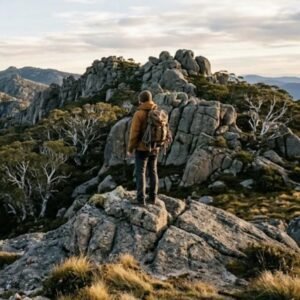
- Navigation by feature stopped working immediately. In whiteout on the Main Range, one granite tor looks exactly like the last one. Compass bearings and a track log, not landmarks
- The tent was pitched in the wrong orientation and we did not want to move it once it was up. We should have moved it
Day three
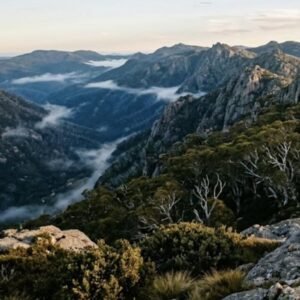
Clear, cold, and completely still by mid-morning. Frost on the tussock, mist sitting in the gullies, and no evidence at all that the previous afternoon had happened. We walked out in three hours.
What we would change
Nothing about the gear list, and quite a lot about how fast we reacted to it. Every piece of equipment we carried did its job. The failures were all decisions — layering late, pitching lazily, and treating a forecast as information about the future rather than a rough prior.
If you are heading up there: carry a proper shell and gloves regardless of the forecast, camp where you can get down, and check conditions with the relevant park authority before you go. [Add local park and weather links here.]